Cell and Gene Therapy Is Scaling. The Infrastructure Isn't Ready.
May 03, 2026
Cell and gene therapies are moving from boutique medicine toward mainstream patient volumes, but the cold-chain, custody, and reimbursement workflows behind them still treat each shipment like a one-off emergency. The next bottleneck is operational, not scientific.
At the Asembia AXS26 Summit at the end of April, Pharmaceutical Commerce ran two pieces back to back that, read together, describe the same problem from opposite ends. Peter Wehrwein's April 30 article on specialty pharmacy reported the average gene therapy exposure at roughly $3 million per patient, with treatment centers and specialty pharmacies sorting out who owns the inventory risk on therapies the medical benefit is paying for (Pharmaceutical Commerce). Three days earlier, Joel Wayment of Cardinal Health 3PL Services and Stephen Appezzato described the supply-chain side: reusable shippers, geographically closed networks, and a Cardinal program that compresses the path from PDUFA approval to a treated patient down to seven days, with delivery windows as short as 55 hours when manufacturing, packaging, and distribution are tightly integrated (Pharmaceutical Commerce).
Both pieces describe an industry that is good at moving one expensive vial across the country on short notice. Neither describes an industry that is ready to do it 100 times a month, every month, without the operational equivalent of a fire drill.
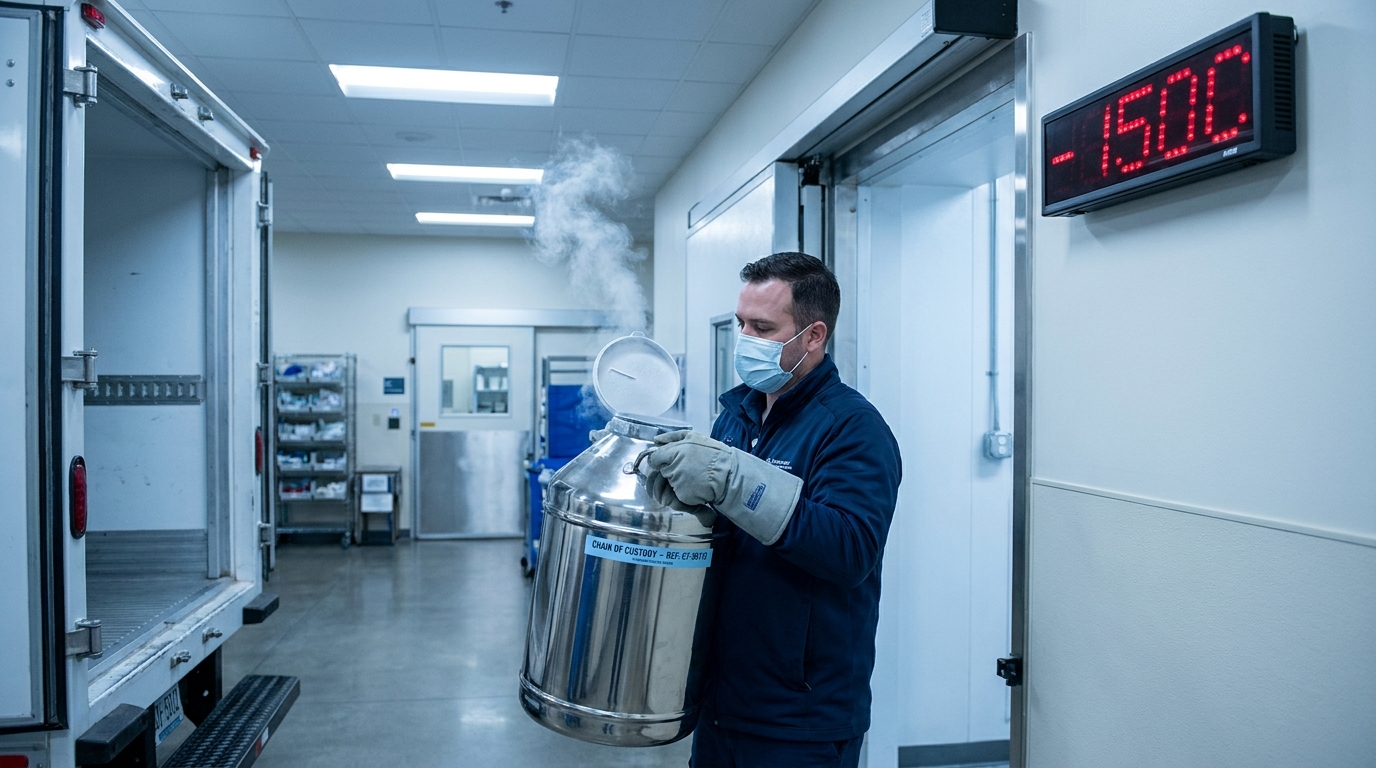
Boutique workflows do not survive mainstream volume
Today's CGT operations were built around protective redundancy. Therapies are high-value, fragile, often patient-specific, and unforgiving of a missed step. Treatment centers, manufacturers, and 3PLs respond with belt-and-suspenders process: extra phone calls, extra confirmations, dedicated coordinators, manual reconciliation, and aggressive packaging. That is rational at one patient per month. It does not scale.
Wehrwein's reporting from Asembia captured the same point in operational terms. The Bayer panel discussion noted that workflows tolerable at one patient per month start to break at 80 patients every six months, and break harder at 100 per month. The industry is approaching those numbers in several indications. Pricing, contracting, and access reviews are already pushing payers and treatment centers toward distribution models that do not assume infinite human attention per case.
Distribution is becoming a financial-risk model
One of the more useful framings in the Asembia coverage is that CGT distribution has become a financial-risk allocation problem dressed up as logistics. The operative question is who carries the cash and inventory exposure while the therapy moves and while the claim clears.
Two models dominate today. In the flash-title model, the manufacturer holds title to the therapy, and therefore the risk, until it lands at the site of care. In the specialty-pharmacy drive-by model, a specialty pharmacy may never take physical possession, but it handles billing, payer coordination, and patient access, absorbing the cash and inventory exposure that a treatment center would otherwise carry. Both designs are responses to the same uncomfortable arithmetic: at $3 million per dose, no hospital pharmacy wants to sit on inventory waiting for a payer to act.
The practical effect is that specialty pharmacies are turning into infrastructure partners rather than dispensers. Their value comes from medical-benefit billing expertise, prior-authorization workflow, payment timing, and the ability to keep treatment centers from carrying unnecessary balance-sheet risk on a therapy they will administer once.
Cold chain and custody are not back-office details
For CGTs, storage and chain of custody sit inside the product, not next to it. A temperature excursion on a shipment of small molecules can mean a discarded pallet. A temperature excursion on an autologous cell therapy can mean a patient does not get treated, the manufacturing slot gets re-scheduled, and the clock on the underlying disease keeps running.
Volume amplifies this. At one patient per month, a coordinator can babysit the shipment, take a phone call from the courier, and reconcile a dozen documents by hand. At 100 patients per month, that approach guarantees a quiet disaster. Either temperature data, custody records, and excursion alerts move with the shipment in a structured, auditable way, or someone misses a handoff and a $3 million product becomes a write-off and a clinical setback at the same time.
Cell & Gene's reporting on advanced therapy logistics has made a similar point: chain of identity and chain of custody have to be tracked through packaging, shipping, storage, and patient use, often into ultra-low or cryogenic ranges (Cell & Gene). Those tracking requirements sit inside the therapy's commercial viability rather than alongside it.
Speed only matters if it is controlled
Cardinal's PDUFA-to-Patients in 7 Days framing is a useful benchmark, and the 55-hour delivery numbers in the Pharmaceutical Commerce piece are real. They depend on tightly integrated manufacturing, packaging, distribution, and site-of-care coordination. Pull any one of those out of alignment and the timeline turns into risk moving faster.
The same article highlights reusable multi-use shippers and geographically closed logistics networks as design responses, partly to reduce transportation distance, partly to lower CO2 impact, and partly to compress the approval-to-patient window. None of these solve cold chain on their own. They are useful when paired with validated qualification, monitored conditions, and documented custody. Otherwise they are sustainability talking points dressed as supply chain.
The honest version of the story is that the goal is repeatable logistics, not heroic logistics. Speed without control is risk that arrives sooner.
What buyers should be asking
For biotech operators planning a CGT launch, and for treatment centers and specialty pharmacies negotiating service agreements, the more useful diligence questions are operational rather than promotional:
- Where do custody changes actually happen? Manufacturer to courier, courier to airport handler, handler to ground, ground to site. Each transfer is a candidate failure point.
- What is the validated temperature envelope at each step? Controlled ambient, 2 to 8°C, frozen, ultra-low, or cryogenic. Generic 2 to 8°C is rarely the whole story for a CGT.
- How do temperature data, custody records, and excursion alerts move with the shipment? If the answer is email and phone calls, the model will not survive scale.
- What is the escalation path during a temperature excursion or customs delay? Who decides, in what timeframe, on what data, with what authority to redirect or replace.
- Who carries inventory and financial risk at each segment? Title, billing, claim timing, and replacement responsibility should be unambiguous in writing before the first patient.
- What does the receiving site's biostorage look like? A validated cryogenic environment with documented chain of custody is the difference between a usable therapy and a salvage exercise on arrival.
Where biostorage fits in the chain
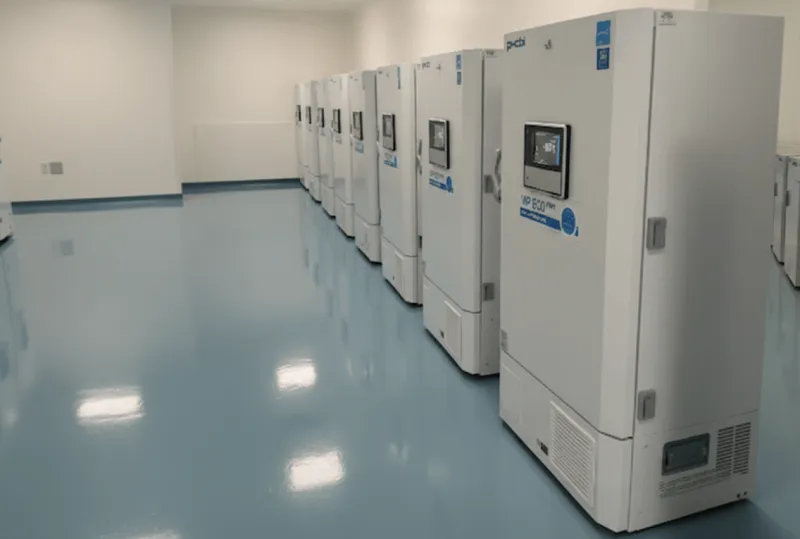
The same disciplines that make a CGT shipment work in transit govern what happens once the product, intermediate, or biospecimen reaches its storage destination. Defined temperature zones, validated equipment, continuous monitoring, qualified handling, and documented custody are not optional once the box is opened. They determine whether a starting material remains usable, whether a manufactured product remains releasable, and whether an audit trail survives an FDA inspection.
Industrializing trust
Mainstreaming CGT is good news. It means more patients get access to therapies that, until very recently, did not exist. It also means the operational bar moves up. The companies that win the next phase will be the ones that make custody, storage, temperature control, and reimbursement timing feel uneventful at scale. Boring is the goal. For pharma operators planning a launch, the practical takeaway is that infrastructure decisions made today, who handles custody, who carries financial risk, where the storage sits, how the data flows, will set a ceiling on how many patients can actually be treated when the volume arrives.
References
- Wehrwein, P. (2026). With Cell and Gene Therapies Proliferation, Specialty Pharmacy Faces New Pricing, Distribution Pressures. Pharmaceutical Commerce, Apr. 30, 2026. pharmaceuticalcommerce.com
- Wayment, J., and Appezzato, S. (2026). Asembia AXS26: What the Rise in CGTs Means for the Supply Chain. Pharmaceutical Commerce, Apr. 27, 2026. pharmaceuticalcommerce.com
- Cell & Gene. Cell & Gene Therapy Cold Chain: Ensuring Product Integrity. cellandgene.com
Have questions about this research or our products?
Contact Our TeamGet new posts delivered to your inbox