Why Blood Collection Tube Validation Is More Ambiguous Than Labs Assume
May 24, 2026
Blood collection tubes are FDA-cleared IVD devices, but that does not make every tube-assay-analyzer combination interchangeable. Labs need a practical review path for compatibility drift.
CAP TODAY published a May 2026 warning from Kimberly Huggler and Christopher Farnsworth that deserves more attention from laboratory directors than it will probably get. The point was simple: the blood collection tube is part of the analytical system, even when the purchasing workflow treats it like a commodity.
That distinction matters. Blood collection tubes can be FDA-cleared IVD devices, but clearance does not prove universal compatibility across every assay, analyzer, additive concentration, separator gel, draw volume, processing delay, storage condition, and manufacturer substitution a lab may use. The gap sits in plain sight. Assay instructions often say “serum” or “plasma.” Tube instructions often describe intended use at the same broad level. The exact tube-assay-analyzer combinations behind those claims are not always visible to the people responsible for result integrity.
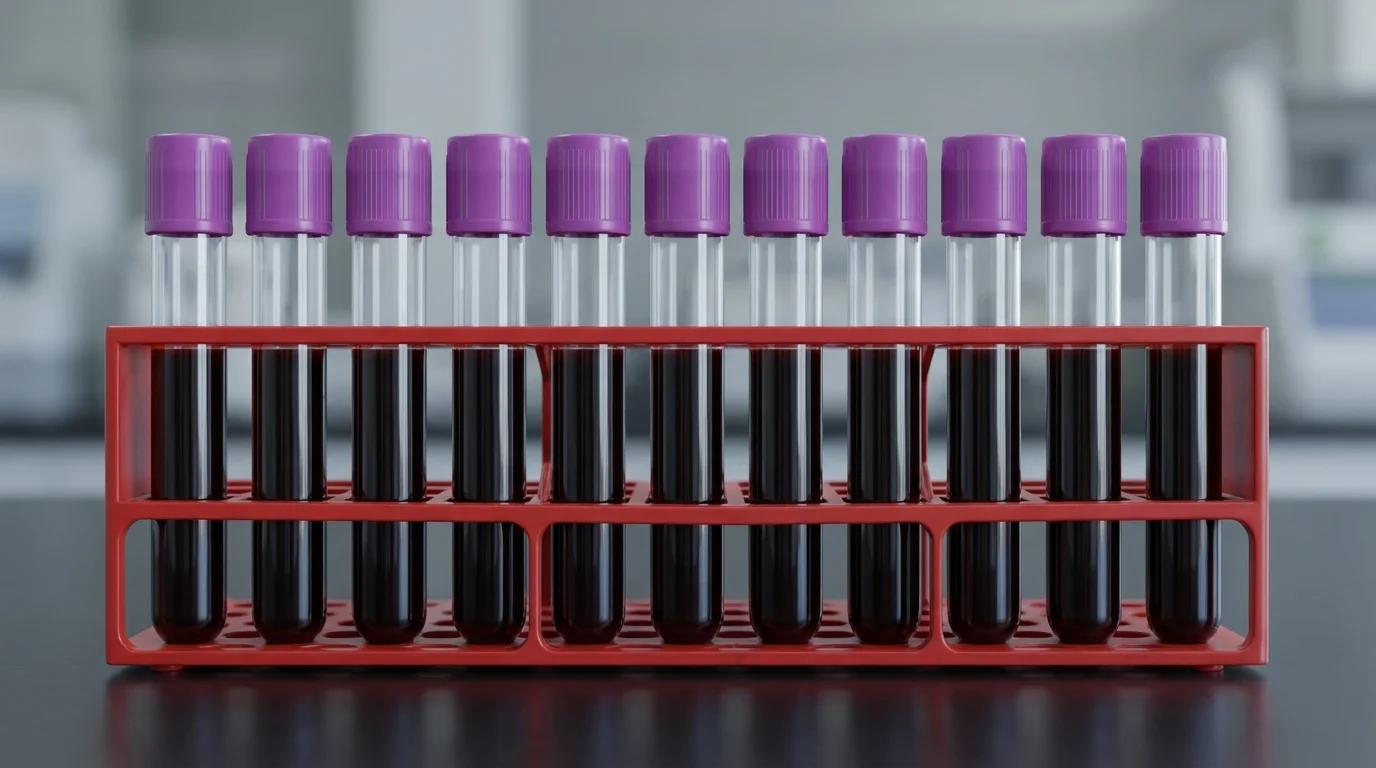
The tube is part of the test system
The FDA’s public IVD materials define in vitro diagnostic products as reagents, instruments, and systems used for diagnosis or health assessment. FDA also states that these products are intended for the collection, preparation, and examination of human specimens. That wording is important because it puts the collection step inside the diagnostic system, not outside it.
Clinical chemistry has known the practical side of this for years. Bowen and Remaley’s 2014 review in Biochemia Medica describes how stopper lubricants, surfactants, clot activators, anticoagulants, separator gels, tube wall materials, storage conditions, and fill volume can interfere with assays. Some effects are analyte-specific. Some are platform-specific. Some appear only when a patient group, storage condition, or assay design creates the right failure mode.
One concrete example came from Meng and Krahn in Clinical Chemistry and Laboratory Medicine. They reported falsely low albumin results in hemodialysis patients when lithium-heparin blood collection tubes were used with an automated bromcresol green method. The narrow lesson is useful: a tube that behaves acceptably in one context can become a material variable in another.
Why representative validation leaves gaps
CLSI GP34-A gives manufacturers and tube users a framework for validation and verification of venous and capillary blood collection tubes. Its scope includes chemistry, immunochemistry, hematology, and coagulation, with focus on quantitative measurements. It does not cover every diagnostic category. It does not remove the need for judgment when a lab’s local use differs from the representative testing behind a product claim.
Representative validation has a practical boundary: no manufacturer can test every combination of tube, additive, analyte, reagent, instrument, patient population, draw order, processing delay, storage temperature, and transport condition. The lab has to decide whether the tested combinations are close enough to its own use.
The lab’s problem is that representative validation can be hard to see. A tube package insert may support serum, plasma, or whole blood. An assay IFU may list acceptable specimen types. The missing detail is often the exact tube family, additive formulation, separator material, manufacturer, analyzer, method, and acceptance criteria used to support those statements.
What the frameworks actually mean
The useful way to read these frameworks is to separate three questions that often get collapsed into one. FDA clearance asks whether a product can be legally marketed for its intended use. CLSI GP34-A asks how tube validation and verification should be structured. The lab’s quality system asks whether the local tube-assay-analyzer-workflow combination is supported well enough for patient testing.
- FDA framework: FDA treats IVDs as products used in the collection, preparation, and examination of human specimens. For a blood collection tube, the practical meaning is that intended use, labeling, device controls, and manufacturer claims matter. FDA clearance does not mean the tube has been tested against every assay or analyzer the lab owns.
- CLSI GP34-A framework: GP34-A is the more directly useful tube document. It gives step-by-step guidance for validation and verification of venous and capillary blood collection devices, with quantitative clinical performance in chemistry, immunochemistry, hematology, and coagulation inside its stated scope. For a lab, tube acceptability depends on measured performance rather than cap color.
- Local quality framework: The lab still has to decide whether its actual use is covered by visible evidence. If the tube IFU, assay IFU, manufacturer data, literature, and local workflow all align, documentation may be enough. If they do not align, the lab needs a risk-based local verification plan.
That is the key distinction. The FDA framework tells the lab that the tube is a regulated device with a labeled intended use. The CLSI framework tells the lab how tube performance should be evaluated. Neither framework automatically answers the local compatibility question when the exact tube, method, analyzer, patient population, and workflow were not part of the representative evidence.
What to check before approving a tube change
A practical review starts before the substitute tube reaches the phlebotomy cart. The first task is to define the change precisely. “Switching serum tubes” is not precise enough.
- Tube identity: Record manufacturer, catalog family, tube material, stopper type, additive, anticoagulant, clot activator, separator gel or mechanical separator, nominal draw volume, fill requirements, expiration dating, and storage conditions.
- Assay requirements: Review the assay IFU for specimen type, accepted anticoagulants, prohibited additives, minimum volume, centrifugation requirements, stability claims, storage limits, and rejection criteria.
- Analyzer and method: Note the analyzer platform and method principle. Immunoassays, LC-MS/MS methods, coagulation assays, trace element tests, therapeutic drug monitoring, and some hormone assays can have different exposure to tube chemistry.
- Workflow conditions: Map draw site, order of draw, transport time, centrifugation delay, centrifuge speed and time, aliquoting, storage temperature, freeze-thaw exposure, and whether the sample remains on gel.
- Patient population: Identify populations where the matrix may be unusual, including dialysis patients, oncology patients, anticoagulated patients, pediatric draws, difficult draws, high hematocrit samples, or patients with very high or very low analyte concentrations.
This turns a vague procurement change into a defined analytical question: can this tube support this measurement in this workflow for this patient population?
When local verification is warranted
Not every tube change deserves the same response. A risk-based triage is more useful than pretending every substitution is identical.
- Low review burden: The new tube is the same manufacturer, same tube family, same additive, same separator, same draw volume, same IFU claims, and the change is administrative or packaging-related. The lab should still document the comparison, but local analytical testing may be limited.
- Moderate review burden: The tube has the same broad specimen type but a different manufacturer, gel, clot activator, anticoagulant formulation, draw volume, or processing instruction. The lab should review literature and vendor data, then decide whether local comparison is needed for high-volume or high-risk assays.
- High review burden: The change affects assays known to be sensitive to adsorption, additive effects, separator gels, anticoagulants, trace contamination, clotting behavior, or matrix effects. Local verification is usually the safer path.
Examples in the high-review category include therapeutic drug monitoring for lipophilic drugs, steroid and hormone testing, some immunoassays, coagulation testing, trace metals, LC-MS/MS workflows, tests performed near clinical decision limits, and assays where the manufacturer’s specimen language is broad rather than tube-specific.
How to make the comparison useful
A useful tube comparison answers the local decision rather than producing paperwork. It has a few parts.
- Choose representative specimens: Include samples across the measuring range, especially around medical decision points. If patient samples are scarce, document the limitation rather than hiding it.
- Pair the collection: When possible, compare old and new tubes from the same draw encounter and control draw order, mixing, processing time, centrifugation, and storage conditions.
- Predefine acceptance: Decide what difference is acceptable before seeing the results. Use clinical requirements, biological variation, method performance, medical decision thresholds, or existing laboratory acceptance criteria where available.
- Look for directional bias: Do not rely only on correlation. A strong correlation can still hide a clinically relevant bias near a decision point.
- Escalate odd results: If the difference is unexpected, contact both the tube and assay manufacturers. Ask what tube families, additives, analyzers, and analytes were included in their validation work.
- Document disposition: Record whether the tube is approved, restricted to certain assays, rejected for specific methods, or allowed only after additional monitoring.
A local comparison has a narrower job than a manufacturer validation file: create enough evidence to support the lab’s own use of the tube.
Failure signals after a switch
Some tube problems are easier to see after implementation than during a small comparison study. ADLM’s clinical laboratory summary notes that population means, sometimes called moving averages, can alert a lab to potential blood collection tube problems. This surveillance cannot replace validation, but it can catch tube problems after implementation.
After a tube switch, labs should watch for shifts that look operational before they look analytical:
- QC and patient mean shifts: Small directional movement after a tube lot or tube vendor change can matter, especially for high-volume chemistry tests.
- Repeat draw patterns: Increased recollections, clotted samples, short draws, hemolysis, or insufficient volume events may signal that the new tube does not behave the same way in the actual workflow.
- Analyzer flags: More sample integrity flags, aspiration errors, clot detections, or unusual reaction curves can point back to the collection device.
- Method-specific complaints: Clinician calls about discordant results, unexpected therapeutic drug levels, or inconsistent hormone results should be linked back to recent tube and workflow changes during troubleshooting.
- Lot-specific drift: A tube type may be acceptable overall while a specific lot, supply disruption, or component change creates a temporary issue.
The review should not end when the new tube is added to the supply cabinet. The first weeks after implementation are part of the evidence trail.
Manufacturers can make this easier
Labs need practical disclosure about the representative testing that has already been done. A complete matrix of every possible condition is unrealistic. Tube manufacturers can publish clearer information about analytes, methods, instruments, additives, fill assumptions, storage conditions, and acceptance criteria used during validation. Assay vendors can make specimen requirements more specific when tube chemistry is relevant.
The 2025 narrative review by Bowen and Dasgupta makes the same broader point from a different angle. Blood collection device components, including tube walls, surfactants, stoppers, separators, additives, catheters, syringes, and needles, can affect test accuracy. The review argues for standardized validation, informed device selection, and stronger integration of blood collection devices into quality control and proficiency testing programs.
Better disclosure would leave local judgment in place while making it less speculative. A lab director should not have to reverse-engineer compatibility from generic specimen language when a supplier already knows which combinations were tested and where the evidence stops.
The practical takeaway
The practical takeaway is direct: treat the specimen container as part of the measurement system. When the tube changes, ask whether the tube, assay, analyzer, patient population, and workflow in front of you are supported well enough to trust the result.
For most routine assays, the answer may be yes with a documented review. For sensitive methods, new vendors, altered additives, substitute products, or unclear IFUs, the answer may require local comparison data. The important distinction is when documentation is enough and when local comparison data are needed. That is where a lab can prevent a cheap supply-chain fix from becoming an expensive quality event.
References
- Huggler K, Farnsworth C. A match made in heaven: Has your blood collection tube been appropriately validated with your assays? CAP TODAY. May 2026. captodayonline.com
- Clinical and Laboratory Standards Institute. Validation and Verification of Tubes for Venous and Capillary Blood Specimen Collection; Approved Guideline (GP34-A). CLSI; 2010. clsi.org
- Bowen RAR, Remaley AT. Interferences from blood collection tube components on clinical chemistry assays. Biochemia Medica. 2014;24(1):31-44. PMC3936985
- Meng QH, Krahn J. Lithium heparinised blood-collection tubes give falsely low albumin results with an automated bromcresol green method in haemodialysis patients. Clinical Chemistry and Laboratory Medicine. 2008;46(2):236-240. PubMed
- U.S. Food and Drug Administration. Overview of IVD Regulation. Content current as of December 20, 2024. fda.gov
- ADLM. Blood Collection Tubes and Pre-Analytical Error. Clinical Laboratory News. December 2014. myadlm.org
- Bowen RAR, Dasgupta A. Blood collection device components: issues, innovations, and recommendations for clinical laboratories and manufacturers: a narrative review. Journal of Laboratory and Precision Medicine. 2025. jlpm.amegroups.org
- Clinical Biochemist Reviews. Interference Testing. 2008. PMC2556582
Have questions about this research or our products?
Contact Our TeamGet new posts delivered to your inbox