

Helping Innovators Innovate.
Learn more about Products and Discoveries

Evidence of Near-ambient Superconductivity
Recently, a significant breakthrough was made in superconductivity research. It has been shown that superconductivity can occur at near-ambient temperatures in a N-doped lutetium hydride. This discovery has the potential to revolutionize various fields, including transportation, energy, and computing.

Albumin's Role in Delivering Anticancer Compounds Past the Blood Brain Barrier
The blood-brain barrier (BBB) is a specialized barrier that protects the central nervous system (CNS) from circulating molecules and pathogens. However, this barrier also limits the delivery of drugs and other therapeutic agents to the brain, which presents a significant challenge in the treatment of CNS diseases, including brain tumors. Albumin, a protein found in blood plasma, has been shown to have a key role in the delivery of anticancer compounds past the BBB.

Mass Spectrometry Helps Identify European’s First Presence in the Americas
Mass spectrometry is a powerful analytical technique that can be used to identify the chemical composition of historical artifacts. The technique works by ionizing a sample and then measuring the mass-to-charge ratio of the resulting ions. Each element has a unique atomic mass, and when a sample is ionized, the ions produced will have a mass-to-charge ratio that is specific to the elements present in the sample.
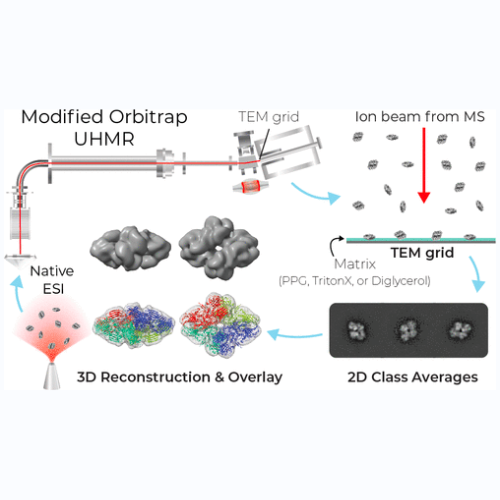
Matrix Landing Mass Spectrometry: Exploring its Applications
MLMS is a soft ionization technique that involves depositing a matrix onto a sample before ionization. The matrix acts as a mediator to transfer energy to the sample, which results in the generation of ions. The resulting ions are then analyzed using MS. MLMS is a type of Desorption Electrospray Ionization (DESI) technique, which allows for the direct analysis of complex samples without the need for extensive sample preparation

Ion Mobility Spectrometry (IMS) Use Cases
IMS has several advantages over other analytical techniques. IMS is a fast technique, allowing for the analysis of large numbers of samples in a short amount of time. IMS is also highly sensitive, allowing for the detection of small amounts of analytes. IMS is also highly specific, allowing for the identification of different types of molecules based on their size, shape, and charge. In this blog post, we will discuss the applications of IMS in environmental health and food research and future trends in the field.