Long-Term Biological Sample Storage: Comprehensive Best Practices Guide
Oct 25, 2025
Comprehensive guide to long-term biological sample storage. Learn best practices for tissue, blood, cell, and DNA/RNA preservation at optimal temperatures.
Maintaining the integrity of biological samples over years or decades requires careful control of storage conditions and protocols. International standards, including ISBER Best Practices, OECD guidelines, and NIH/NCI biobanking guidance, emphasize stringent temperature control, proper preservation techniques, reliable storage infrastructure with backups, and meticulous inventory management.
This comprehensive guide provides detailed best practices for long-term storage of different sample types, tissues, blood, cells, and DNA/RNA, covering recommended temperatures, preservation methods, stability, infrastructure, labeling, and retrieval considerations.
Solid tissue requires ultra-low temperatures
–150°C (PBMCs)
Separated components at cryogenic temps
Viable cells require liquid nitrogen
RNA: –80°C only
Purified nucleic acids with varying stability
Tissue Storage: Solid Tissue Samples
Recommended Storage Temperatures for Tissues
Temperature Storage Guidelines
DNA/RNA stable 7-10+ years
Vapor-phase LN₂
Chemically preserved
Fresh or frozen tissue specimens require ultra-low temperatures for long-term preservation:
Ultra-Low Temperature Storage (–80°C)
Commonly used for multi-year storage, studies show DNA and RNA in tissue remain stable at –70 to –80°C for at least 7 to 10 years. This temperature is suitable for most research applications requiring molecular integrity.
Cryogenic Storage (–150°C)
For indefinite or decades-long storage, vapor-phase liquid nitrogen at approximately –150°C is recommended. Storage below the glass transition of water (~–135°C) virtually halts all degradation processes, providing the longest possible sample preservation.
Tissue Preservation Techniques
Snap-Freeze Immediately
Immerse fresh tissue in liquid nitrogen or place on dry ice immediately after collection to prevent post-mortem degradation
Use Cryovials
Store snap-frozen tissue in cryogenic-grade polypropylene vials with gasketed screw caps
Transfer to –80°C or LN₂
Place in ultra-low freezer at –80°C or vapor-phase liquid nitrogen at –150°C for long-term storage
Monitor Continuously
Implement temperature monitoring with alarms and backup power systems
Cryopreservation (Freezing)
Fresh tissues should be snap-frozen as soon as possible after collection, typically by immersing in liquid nitrogen or on dry ice, to prevent post-mortem degradation. Snap-frozen tissue is stored in cryovials at –80°C or below.
For preserving tissue with viable cell recovery potential, cryoprotective media may be used-tissue can be submerged in a cryoprotectant solution like 10% DMSO or glycerol before controlled-rate freezing. However, intact tissue viability is rarely maintained unless cells are isolated. For most research uses, freezing effectively preserves DNA, RNA, and protein epitopes.
Fixed and Embedded Storage (FFPE)
An alternative for long-term archival is formalin fixation and paraffin embedding (FFPE). Fixed tissue in paraffin can be stored at ambient temperature (approximately 18 to 22°C) in dark, low-humidity conditions. This method preserves histological morphology indefinitely and DNA for PCR applications, though DNA becomes fragmented. RNA is largely degraded in FFPE samples. While ideal for pathology archives, FFPE is not suitable for preserving nucleic acid integrity or live cells.
Stabilizing Reagents
When immediate freezing is not possible, tissues can be placed in specialized storage reagents. RNAlater, an aqueous RNA stabilization solution, can permeate tissue and stabilize RNA at 4°C or even room temperature for a limited time. This is useful for preserving gene expression profiles when freezing is delayed, though long-term storage still requires freezing or fixation.
Expected Stability of Tissue Samples
| Storage Condition | Stability Period | Molecular Integrity |
|---|---|---|
| –80°C | 7-27+ years documented | Excellent DNA/RNA preservation |
| –150°C (LN₂ vapor) | Indefinite (decades+) | Virtually no degradation |
| –20°C | Months (inadequate) | Significant decay over time |
| FFPE (room temp) | Decades | ~ DNA fragmented, RNA degraded |
Tissue Storage Infrastructure
Ultra-Low Freezers
Validated –80°C freezers with temperature monitors, alarms, and controlled ambient environments (15-22°C)
Liquid Nitrogen Storage
Vapor-phase LN₂ tanks maintaining –150°C with continuous level monitoring and automated refill systems
Redundancy Systems
Backup power generators, CO₂/LN₂ backup injectors, and duplicate sample storage in separate locations
Monitoring & Alarms
24/7 temperature monitoring with remote notification systems and alarm response protocols
Suitable Storage Vessels
- Use cryogenic-grade polypropylene cryovials with gasketed or O-ring screw caps
- Avoid glass ampoules or cheap plastic tubes that can crack at ultra-low temperatures
- Wrap tissue in aluminum foil or barrier bags to prevent desiccation (freezer burn)
- Ensure caps are tightly sealed before storage
- Regularly defrost freezers to clear ice buildup and maintain door seal integrity
Tissue Labeling and Inventory Tracking
Durable Labels: Affix labels designed to withstand low temperatures and moisture. Cryogenic labels or barcodes printed with solvent-resistant ink are ideal. Labels should include a unique sample ID, and consider using barcoded labels that can be scanned to reduce human error during retrieval.
Database Management: Implement a Laboratory Information Management System (LIMS) to track sample location, collection date, donor information, quality metrics, and freeze-thaw history. Electronic inventory systems prevent sample loss and enable efficient retrieval.
Tissue Sample Retrieval and Handling
- Work quickly to minimize freezer door open time
- Use insulated containers or dry ice buckets for transport
- Pre-identify exact sample locations using inventory system
- Keep tissue frozen until the moment of processing
- Thaw on ice or in refrigerator for controlled thawing
- Minimize freeze-thaw cycles (each cycle degrades quality)
- Log every retrieval event in database with date, purpose, and user
Blood Sample Storage
Recommended Storage Temperatures for Blood
–80°C (long-term)
Refrigerate for days, freeze for years
–20°C acceptable
Stable for years at ultra-low temps
Requires liquid nitrogen for viability
Less common, requires cryoprotection
Blood Preservation Techniques
Plasma and Serum Collection
Collect blood in appropriate tubes (EDTA or heparin for plasma, serum separator tubes for serum). Centrifuge within a specified timeframe after collection to separate cells from plasma or serum. Aliquot into cryovials and snap-freeze or place at –80°C. Avoid repeated freeze-thaw cycles by creating multiple aliquots.
Isolate PBMCs
Use density gradient centrifugation to separate PBMCs from whole blood
Prepare Freezing Medium
Resuspend cells in 90% FBS or culture medium plus 10% DMSO
Controlled-Rate Freezing
Freeze at approximately –1°C per minute down to –80°C
Transfer to LN₂
Move to liquid nitrogen within 24-48 hours for long-term storage
Expected Stability of Blood Samples
Blood Sample Retrieval
Thawing Plasma/Serum
Thaw on ice or at room temperature, depending on the downstream assay requirements. Mix gently after thawing to ensure homogeneity. If not using the entire aliquot, consider whether refreezing is acceptable for your application-many analytes tolerate one refreeze, but quality may diminish.
Cell Sample Storage
Recommended Storage Temperatures for Cells
Cell Viability vs. Storage Temperature
Optimal Viability
Excellent Preservation
Viability Decreases
Viable Cell Cultures: Long-term storage requires cryogenic temperatures. Store in liquid nitrogen vapor phase (approximately –150°C) or liquid phase (–196°C) for optimal viability preservation. While –80°C can preserve some cells temporarily, viability decreases more rapidly compared to liquid nitrogen storage over months to years.
Cell Pellets (for nucleic acid extraction): If cells are not needed viable, pellets can be snap-frozen and stored at –80°C for DNA/RNA extraction later.
Cell Preservation Techniques
- Harvest cells during log-phase growth for best viability
- Resuspend in freezing medium with cryoprotectant (typically 10% DMSO)
- Distribute into cryogenic vials (≈1 million cells/mL per vial)
- Use controlled-rate freezing achieving –1°C per minute to –80°C
- Transfer vials to liquid nitrogen storage within 24-48 hours
- For clinical applications, use serum-free freezing media
Expected Stability of Cell Samples
Properly cryopreserved cells can remain viable for decades in liquid nitrogen. Studies document successful recovery of cells after 20 to 30+ years of cryogenic storage. Viability upon thawing typically ranges from 60% to 90%, depending on cell type and freezing protocol quality. Each freeze-thaw cycle reduces viability, so cells should not be refrozen.
Cell Storage Infrastructure
Vapor-Phase LN₂ Tanks
Prevents cross-contamination while maintaining temperatures below –150°C
Monitoring Systems
Continuous level monitoring with automated alarms for low nitrogen levels
Safety Features
Oxygen sensors in storage rooms to prevent asphyxiation from nitrogen gas
Organization System
Cryogenic storage boxes with detailed location mapping and color-coding
Cell Sample Retrieval
Rapid Thawing
Quickly thaw vial in 37°C water bath with gentle agitation until small ice crystal remains
Immediate Transfer
Transfer cells to pre-warmed culture medium to reduce exposure time
Dilute DMSO
Gradually dilute to reduce DMSO concentration and toxicity
Wash & Culture
Centrifuge, remove freezing medium, resuspend in fresh growth medium
Document Viability
Record post-thaw viability and any growth abnormalities in database
DNA and RNA Storage
Recommended Storage Temperatures for DNA/RNA
| Sample Type | Short-Term Storage | Long-Term Storage | Alternative Method |
|---|---|---|---|
| DNA | 4°C (months) –20°C (years) |
–80°C (decades) | Room temp (dried/desiccated) |
| RNA | –80°C only | –80°C or LN₂ (decades) | None recommended |
DNA/RNA Preservation Techniques
Extraction and Purification
Use high-quality extraction methods to obtain pure nucleic acids free from contaminants like proteins, salts, and organic solvents. Common methods include phenol-chloroform extraction, spin column kits, and magnetic bead-based systems.
Storage Buffer
DNA: Typically stored in TE buffer (10 mM Tris, 1 mM EDTA, pH 8.0) or nuclease-free water. TE buffer provides pH buffering and EDTA chelates divalent cations that could catalyze DNA degradation.
RNA: Stored in nuclease-free water or TE buffer, sometimes with RNase inhibitor added for additional protection.
Aliquoting Strategy
- Divide DNA and RNA into small aliquots to avoid repeated freeze-thaw cycles
- For RNA especially, create single-use aliquots (even as little as 5 µL)
- Label each aliquot with sample ID, concentration, and extraction date
- Store master stock separately with minimal access
- Use barcoded tubes for large sample collections
Dried DNA Storage
DNA can be dried down and stored desiccated at room temperature or 4°C for very long periods. This eliminates freezer dependency and can theoretically preserve DNA for centuries. Specialized systems maintain controlled humidity for dried DNA storage. Rehydrate with nuclease-free water when needed.
Expected Stability of DNA/RNA
DNA/RNA Storage Infrastructure
Dedicated Freezers
Use separate –80°C freezers for nucleic acids to minimize temperature fluctuations
Desiccated Systems
Low-humidity environments with vacuum-sealed bags for dried DNA backup storage
Contamination Prevention
Separate pre-PCR samples from post-PCR materials to prevent amplicon contamination
Quality Monitoring
Regular integrity checks using electrophoresis, spectrophotometry, or RIN measurements
DNA/RNA Sample Retrieval
Thawing Protocol
- Remove tubes from freezer and thaw on ice or at 4°C for gentle thawing
- DNA can be thawed at room temperature if necessary
- RNA should always be kept on ice during thawing to minimize RNase activity
- Spin down briefly after thawing to collect any condensate
- Gently mix by flicking or pipetting (do not vortex RNA)
Refreezing Guidelines
| Sample Type | Freeze-Thaw Tolerance | Refreezing Method |
|---|---|---|
| DNA | Can tolerate multiple cycles | Return to –80°C promptly with tight cap |
| RNA | Maximum 3 cycles recommended | Snap-freeze in dry ice/ethanol or LN₂ |
Quality Checks Before Critical Applications
For samples stored long-term or subjected to multiple freeze-thaws, perform quality checks before critical applications:
- Run gel electrophoresis to check DNA integrity and molecular weight
- Use spectrophotometry to assess A260/280 ratio (purity indicator)
- Measure RNA Integrity Number (RIN) for RNA quality assessment
- Document quality metrics in database for future reference
Handling Precautions
For DNA: Prepare many small aliquots and maintain a working tube at 4°C or –20°C, replenished from the –80°C master stock as needed. This keeps the master stock pristine with minimal freeze-thaws.
For RNA: Never keep working stocks at 4°C beyond a single day. Some labs prepare single-use aliquots that are entirely consumed in one experiment to avoid refreezing. While labor-intensive initially, this approach maximizes long-term RNA preservation.
General Best Practices Across All Sample Types
- Use appropriate ultra-low or cryogenic temperatures for each sample type
- Minimize freeze-thaw cycles through strategic aliquoting
- Implement robust backup systems including redundant freezers and alarm monitoring
- Maintain detailed inventory tracking with LIMS and barcode systems
- Follow strict handling protocols with comprehensive staff training
- Conduct regular quality monitoring and sample integrity assessments
- Develop disaster recovery and business continuity plans
- Ensure ethical and regulatory compliance for all stored materials
- Document all procedures with Standard Operating Procedures (SOPs)
- Perform periodic audits and update protocols as technology advances
Standard Operating Procedures
Develop and document detailed SOPs for sample collection, processing, storage, and retrieval. Train all personnel on these procedures. Regular audits ensure compliance with protocols. Update SOPs when new best practices emerge or equipment changes.
Quality Control and Monitoring
Regular Monitoring
Temperature checks, alarm testing, and equipment maintenance schedules
Sample Testing
Periodic integrity assessments to detect degradation trends early
Documentation
Comprehensive records of all quality control activities and findings
Continuous Improvement
Regular review and optimization of storage protocols and procedures
Sample Tracking and Data Management
Use Laboratory Information Management Systems (LIMS) with barcode integration. Implement redundant data backups. Ensure data security and privacy compliance (especially for human samples under regulations like HIPAA). Maintain comprehensive audit trails of all sample transactions.
Risk Management
- Develop disaster recovery and business continuity plans
- Conduct regular risk assessments of storage facilities and equipment
- Maintain insurance for valuable sample collections
- Establish material transfer agreements for shared samples
- Plan for equipment failure scenarios with backup protocols
- Test emergency response procedures regularly
Ethical and Regulatory Compliance
Ensure informed consent for human samples with explicit language about long-term storage. Comply with institutional review board requirements. Follow regulations for international sample sharing. Maintain proper documentation for regulatory audits.
Staff Training
Provide comprehensive training on biosafety, sample handling techniques, equipment operation, and emergency procedures. Conduct regular refresher training sessions. Document all training activities. Ensure adequate staffing for 24/7 alarm response and emergency situations.
Conclusion
Long-term biological sample storage requires meticulous attention to temperature control, preservation methods, infrastructure reliability, and documentation. By following established best practices from ISBER, OECD, and NIH guidelines, biorepositories and laboratories can preserve precious biological samples for decades while maintaining their scientific and clinical value.
Investing in proper storage infrastructure and protocols today ensures that valuable biological samples remain viable and useful for future research and clinical applications, potentially spanning generations of scientific advancement.
References
- National Cancer Institute, Division of Cancer Treatment and Diagnosis. "Best Practices for Biospecimen Resources." Available at: dctd.cancer.gov
- International Society for Biological and Environmental Repositories (ISBER). "2018 Best Practices for Repositories: Collection, Storage, Retrieval and Distribution of Biological Materials for Research." Available at: vhir.vallhebron.com
- "Ultra-Low Temperature Storage of Tissues and Blood Specimens." Biobanking.com. Available at: biobanking.com
- "Sample Management and Tracking Systems." Biotools Australia. Available at: biotools.com.au
- International Agency for Research on Cancer (IARC). "Common Minimum Technical Standards and Protocols for Biological Resource Centres Dedicated to Cancer Research." IARC Working Group Reports. Available at: publications.iarc.who.int
- "Is Liquid Nitrogen The Only Gold Standard For Long-Term Sample Storage?" Inside Biobanking, Thermo Fisher Scientific. Available at: thermofisher.com
- Stage Biologics. "How to Properly Store Your Preclinical Study Materials." Available at: stagebio.com
- "Storage of Human Biospecimens: Selection of the Optimal Storage Temperature." ASOMEF. Available at: asomef.org.co
- "The Benefits of DMSO-Free Cryopreservation." Biocompare: The Buyer's Guide for Life Scientists. Available at: biocompare.com
- "Long-Term Stability of Cord Blood Units After 29 Years of Storage." Oxford Academic. Available at: academic.oup.com
- U.S. Food and Drug Administration, Center for Biologics Evaluation and Research. "Guidance for Industry, Current Good Tissue Practice (CGTP) and Additional Requirements for Manufacturers of Human Cells, Tissues, and Cellular and Tissue-Based Products (HCT/Ps)." December 2011.
- Campbell, L.D., Astrin, J.J., DeSouza, Y., Giri, J., Patel, A.A., Rawley-Payne, M., Rush, A., & Sieffert, N. "ISBER Best Practices: Recommendations for Repositories." Biopreservation and Biobanking, 2012.
Note: This article synthesizes best practices from multiple authoritative sources including ISBER (International Society for Biological and Environmental Repositories), NIH/NCI biobanking guidance, OECD guidelines, and peer-reviewed scientific literature. All cited materials represent current standards in the field of biospecimen storage and preservation as of 2025.
Have questions about this research or our products?
Contact Our TeamGet new posts delivered to your inbox
Latest Biostorage Articles

Learn how storage temperature affects CAR-T, stem cells, MSCs, and iPSCs, including cryogenic thresholds, excursions, and quality risks.
Read More →
Learn how automated biobanking systems, robotic freezers, and AI-driven workflows are redefining biospecimen management and modern biostorage solutions.
Read More →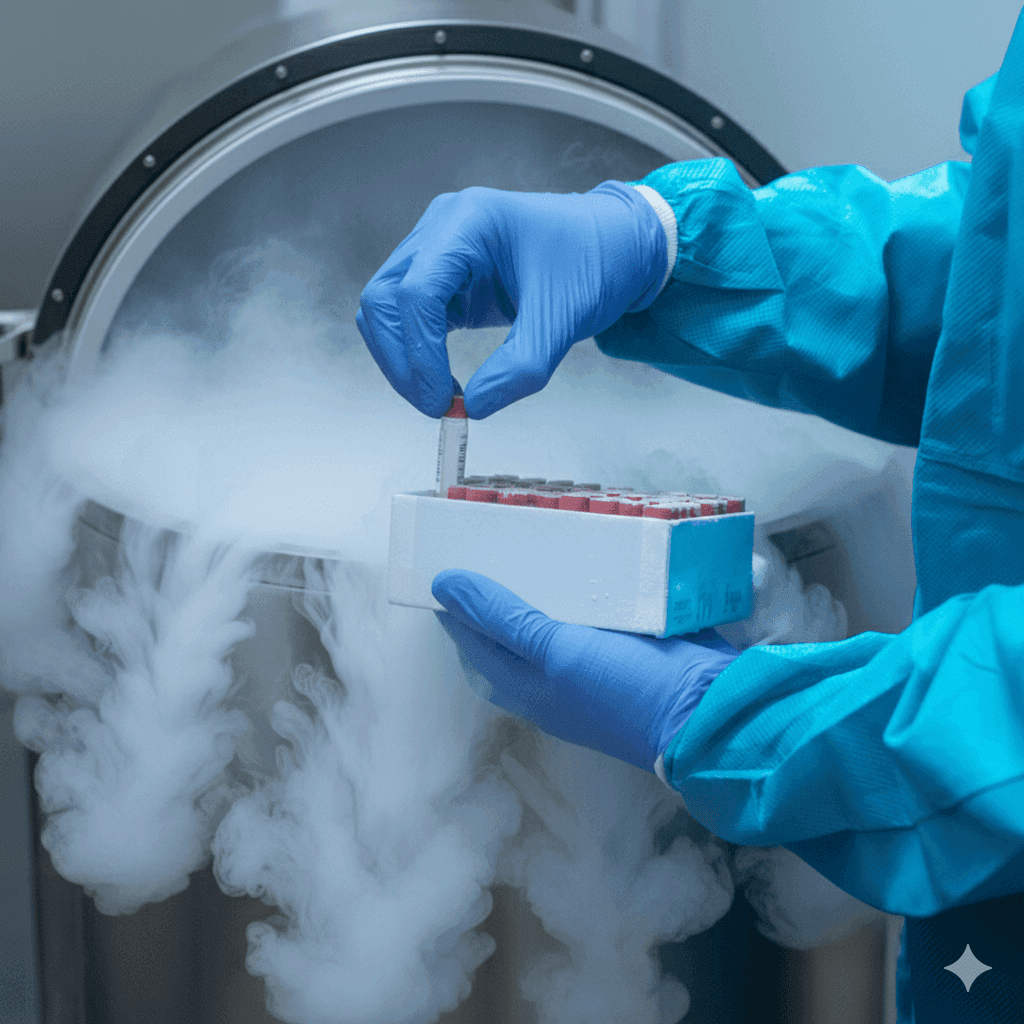
Learn how to prevent freeze-thaw damage in biobanking and biorepository operations. Explore NCI and ISBER evidence-based best practices for biospecimen handling, freezer validation, and biostorage m
Read More →